A flexible weight maintenance meal plan framework for older adults using familiar protein foods, fiber-rich plants, adaptable portions, texture options, and practical shopping steps.
A weight maintenance meal plan generator for older adults should create a repeatable food routine, not a promise about a particular scale number. The most useful plan starts with foods the person likes, a realistic shopping budget, the equipment available, and any guidance from a clinician. It then distributes protein-containing foods, vegetables, fruit, whole grains, beans, and fluids across meals and snacks in portions that feel comfortable.
Older adults have different energy needs, activity levels, appetites, dental needs, swallowing considerations, and medical conditions. This guide offers a general planning framework. It does not calculate a personal calorie target, diagnose a problem, or replace advice from a registered dietitian or healthcare professional. A maintenance plan should support strength, energy, enjoyment, and independence rather than enforce restriction.
What a maintenance plan should do
A good generator turns a few practical inputs into options: number of meals, preferred proteins, favorite produce, cooking time, leftovers, and foods to avoid. It should let you swap chicken for tofu, lentils for fish, or yogurt for a fortified soy alternative without breaking the entire week. It should also include a “small appetite” option and a “low-prep” option.
Weight maintenance is not a perfectly flat line. Body weight can change with fluid, digestion, activity, illness, and ordinary day-to-day variation. A plan is working when it makes nourishing choices easier and fits the person’s life. If there is unintentional weight loss, repeated falls, weakness, ongoing appetite loss, or difficulty chewing or swallowing, seek professional evaluation rather than simply adding more rules.
NIDDK’s general healthy-eating guidance includes vegetables, fruits, whole grains, beans, peas, nuts, seeds, dairy or suitable alternatives, and protein foods such as eggs, seafood, poultry, or lean meats. These categories form the foundation of this plan. Visit the Weight Maintenance hub for related routines and planning articles.
Step 1: Gather the inputs
Before building a week, write down the details that will shape the plan:
- Schedule: usual breakfast, lunch, dinner, snack, and medication or appointment times.
- Food pattern: omnivore, vegetarian, vegan, pescatarian, or another preference.
- Texture needs: soft foods, chopped foods, easy-to-chew foods, or clinician-recommended textures.
- Kitchen access: stove, microwave, blender, slow cooker, refrigerator, freezer, or no-cook workspace.
- Budget and shopping: store access, transportation, preferred package sizes, and foods already on hand.
- Medical guidance: any prescribed limits or recommendations that should be followed.
Do not enter medication doses or attempt to use a food planner to adjust treatment. If a person has diabetes, kidney disease, heart disease, gastrointestinal disease, cancer treatment, food allergies, or a history of eating disorders, a qualified professional can help adapt the inputs safely.
Step 2: Build a meal architecture
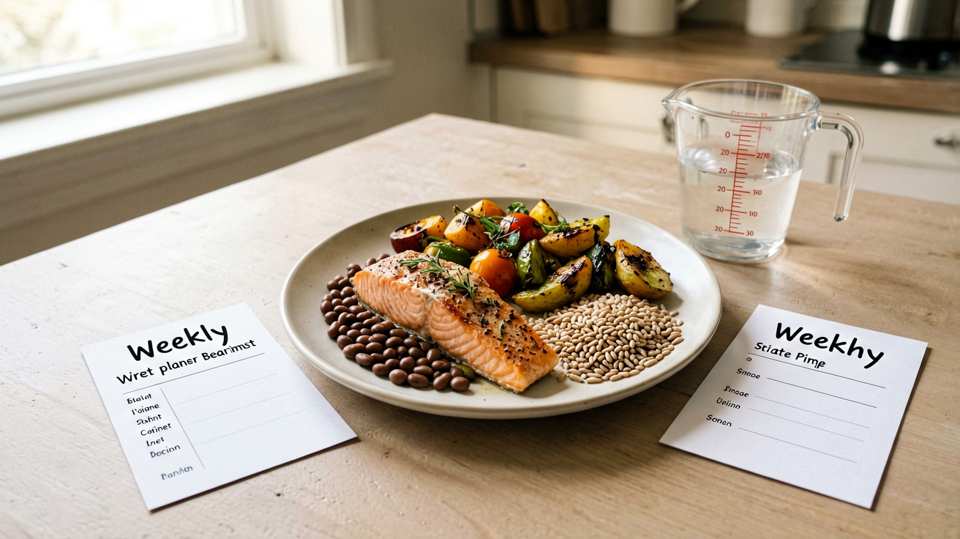
Use a simple plate architecture rather than a fixed menu. At each main meal, consider a protein anchor, one or two plant foods, and a satisfying carbohydrate or fat source as appropriate for the person. For example, salmon with soft roasted vegetables and potatoes; lentil soup with whole-grain toast; tofu with rice and cooked greens; or yogurt with oats and fruit.
This structure does not require every meal to look the same. Breakfast can be savory, lunch can be leftovers, and dinner can be a sandwich with soup. A plan becomes sustainable when it allows repetition and substitutions. If a large meal is uncomfortable, divide the components into smaller eating occasions while keeping food safety in mind.
Step 3: Choose protein anchors
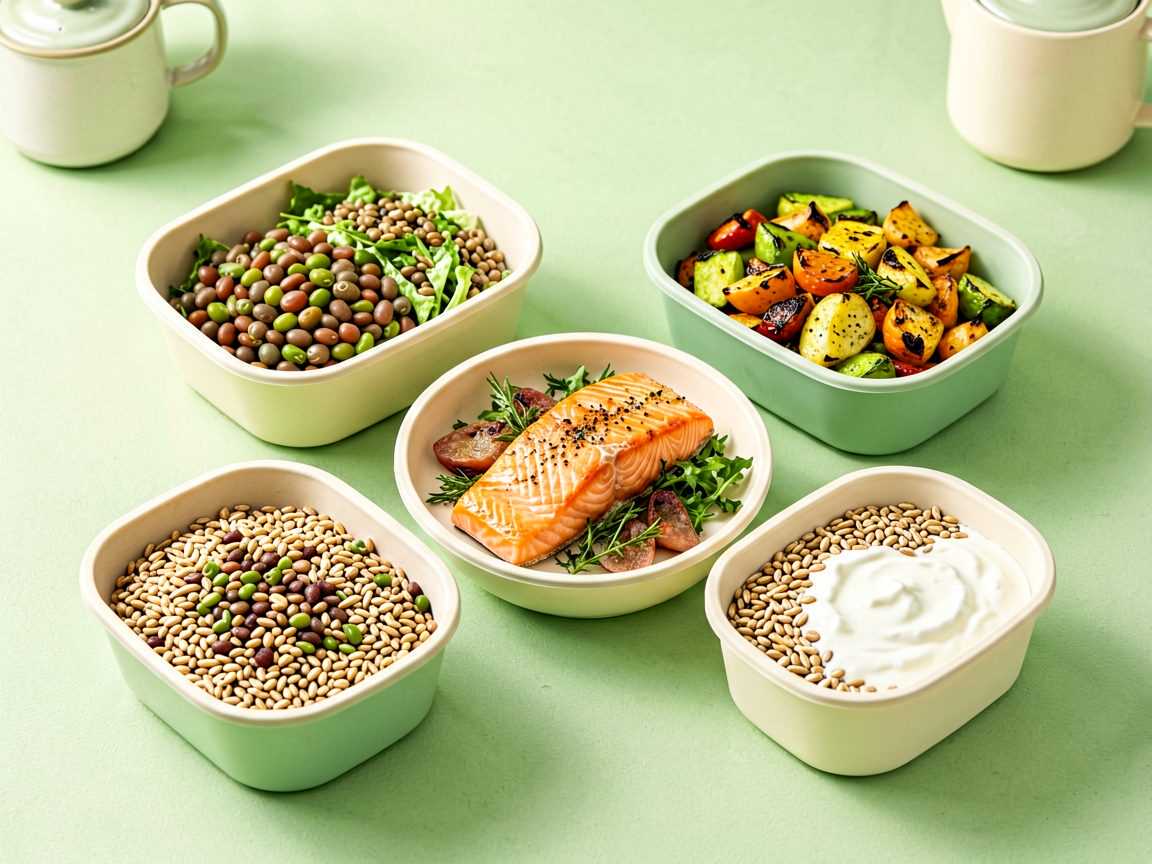
Protein needs are individual, so this guide uses a list rather than a universal number. Choose several anchors that fit the person’s preferences: eggs, fish, poultry, lean meat, Greek yogurt, cottage cheese, milk, fortified soy beverage, tofu, tempeh, edamame, beans, or lentils. Include at least one easy option that requires little cooking.
For older adults who eat small portions, protein can be distributed through the day instead of saved for one dinner. A yogurt at breakfast, beans at lunch, and fish or tofu at dinner are examples. A snack might be milk, edamame, cottage cheese, or a small nut-and-fruit combination. A dietitian should individualize the plan when kidney function, swallowing, illness, or recovery changes protein needs.
Step 4: Add fiber-rich foods gradually
Fiber-rich foods bring variety and can support digestive regularity. Use vegetables, fruits, beans, lentils, oats, whole grains, nuts, and seeds in forms that are comfortable. Cook vegetables until tender, peel fruit when needed, blend beans into soup, or choose oatmeal when chewing is difficult.
Increase fiber gradually instead of adding several large servings at once. Chia, flax, bran, beans, and concentrated fiber products can be useful for some people but uncomfortable for others. Add fluids according to the person’s normal care plan, especially if a clinician has provided fluid guidance. Persistent constipation, diarrhea, pain, vomiting, or a major change in bowel habits deserves medical advice.
A seven-day planning template
Use the following as a pattern, not a prescription:
| Day | Breakfast anchor | Lunch pattern | Dinner pattern | Flexible snack |
|---|---|---|---|---|
| Monday | Yogurt, oats, berries | Lentil soup and toast | Fish, potatoes, cooked greens | Fruit with cottage cheese |
| Tuesday | Eggs and soft whole-grain toast | Tofu rice bowl | Chicken or bean chili | Milk or fortified soy beverage |
| Wednesday | Oatmeal with milk and banana | Leftover chili with vegetables | Salmon or tempeh with quinoa | Yogurt or edamame |
| Thursday | Cottage cheese and pear | Bean salad or soft bean wrap | Turkey, tofu, or lentil pasta | Nut butter with fruit |
| Friday | Tofu scramble or yogurt bowl | Soup with a protein side | Roasted chicken or chickpeas | Soft fruit smoothie |
| Saturday | Egg or soy breakfast bowl | Leftovers with added vegetables | Simple fish, bean, or tofu tacos | Hummus with tender vegetables |
| Sunday | Oats, yogurt, and fruit | Sandwich with soup | One-pot meal for leftovers | Small dessert with yogurt |
Swap foods freely. The table is an example of planning logic: repeat ingredients, include different protein anchors, and make leftovers part of the system. Exact calories and nutrient values depend on portions and products.
Make portions and texture adaptable
Write each meal in three sizes: “usual,” “small appetite,” and “higher activity day,” without assigning rigid numbers. The small version might be half a sandwich with soup, a small yogurt with fruit, or a cup of lentil soup. A higher-activity day might add an extra serving of oats, potatoes, rice, or fruit if that fits the person’s needs and appetite.
Use texture substitutions: cooked vegetables instead of raw salad, mashed beans instead of whole beans, soft fish instead of dry meat, yogurt instead of crunchy toppings, and blended soups when appropriate. If swallowing safety is a concern, follow the texture plan from the healthcare team. Do not assume that blending every food makes it safe.
Shopping and batch-cooking logic
Build a list from categories: three protein anchors, three vegetables, two fruits, one bean or lentil, one whole grain or starchy side, one dairy or fortified alternative, and two convenience items. Frozen vegetables, canned beans, plain yogurt, eggs, pre-cooked grains, and low-sodium soups can reduce preparation demands. Rinse canned beans when that is appropriate for the person’s plan and compare labels for sodium.
Batch-cook only what will be eaten safely. Prepare one protein, one grain or potato, one cooked vegetable, and one sauce. Store portions promptly and follow food-safety guidance. Label containers with dates, keep cold foods chilled, and freeze extra portions when they will not be eaten soon.
How to review a maintenance plan
Review the plan once a week using practical questions:
- Which meals were easiest to prepare and enjoy?
- Was there a protein anchor at several eating occasions?
- Which plant foods felt comfortable?
- Was the shopping list realistic for budget and transportation?
- Did any symptom, appointment, or schedule problem make eating difficult?
Change one logistical detail at a time. Move yogurt to the front of the refrigerator, pre-cut vegetables, buy smaller packages, or schedule a grocery delivery. Do not respond to ordinary weight fluctuations by making drastic changes. If weight is changing unintentionally or health is declining, contact a clinician.
Tools and companion resources
A generator is most helpful when paired with a simple tracker. Use the Tools hub to organize meals, protein reminders, and shopping. The goal-weight maintenance printable offers another planning angle, while the strength-training maintenance plan shows how activity context can change the menu.
Choose one tool and one weekly review. A complicated dashboard can create work without creating better meals. The best plan is one the person can understand, adjust, and use independently or with a caregiver.
Boundaries and when to seek help
This article cannot determine why someone has lost or gained weight, and it cannot set a safe calorie, fluid, protein, or fiber target. Seek professional guidance for unintentional weight change, persistent digestive symptoms, swallowing problems, dehydration concerns, repeated falls, weakness, confusion, or inability to maintain regular meals. Ask about a referral to a registered dietitian when a condition or treatment affects food choices.
Do not use the plan to stop a medication, change a dose, or treat a diagnosis. A meal plan supports daily organization; it is not medical care.
Bottom line
A weight maintenance meal plan generator for older adults should produce flexible options built around familiar protein foods, comfortable plant foods, realistic portions, and manageable preparation. Start with the person’s schedule and preferences, repeat useful ingredients, adapt texture, increase fiber gradually, and review the plan with neutral observations. Maintenance is a long-term routine, not a test of perfection.
Sources and boundaries: General nutrition guidance is informed by NIDDK healthy-eating guidance. This article is educational and does not diagnose, prescribe, calculate individualized targets, or replace clinical or dietetic advice.